The meaning of poetry is to give courage. A poem is not a puzzle that you the dutiful reader are obliged to solve. It is meant to poke you, get you to buck up, pay attention, rise and shine, look alive, get a grip, get the picture, pull up your socks, wake up and die right. Poets have many motives for writing (to be published on expensive paper, to show up others in your M.F. A. program, to flaunt your sensitive nature and thereby impress someone who might then go to bed with you, to win valuable prizes and fellowships and maybe a year in Rome or Provence, to have a plausible excuse for making a mess of your life), but what really matters about poetry and what distinguishes poets from, say, fashion models or ad salesmen is the miracle of incantation in rendering the gravity and grace and beauty of the ordinary world and thereby lending courage to strangers. This is a necessary thing. At times life becomes almost impossible, and you curl up under a blanket in a dim room behind drawn shades and you despise your life, which seems mean and purposeless, a hoax and a cheat, your shining chances all wasted, pissed away, nobody can change this or make this better, love is lost, hope gone, nothing left but to pour a glass of gin and listen to weepy music. But it can help to say words. Moaning helps. So does prayer. God hears prayer and restores the souls of the faithful. Walking helps. Many people have pulled themselves up out of the pit by the simple expedient of rising to their feet, leaning slightly forward, and putting one foot ahead of the other. Poems help. In Mrs. Fleischman's eleventh-grade English class, my assignment was to memorize Shakespeare's sonnet "When in disgrace with fortune and men's eyes," and so I did, and having it in my head for forty years has brought me many moments of clarity, and also Housman's "Loveliest of trees the cherry now," and "A Blessing" by James Wright, and "Wild Geese" by Mary Oliver and other poems. They don't come to me in moments of hilarity, but often when feeling bereft or drowning in work or even just being late to an appointment, stuck in traffic, ranting at myself. Wright's two Indian ponies have come to me, their eyes full of kindness, Oliver's geese have honked, Shakespeare's lark at break of day from sullen earth arises, the heart is calmed, the gnashing stops, and one goes on.
Garrison Keillor wrote that and I had to share it with you because this is why I love poetry.
William Shakespeare - Sonnet #29
When, in disgrace with Fortune and men's eyes,
I all alone beweep my outcast state,
And trouble deaf heaven with my bootless cries,
And look upon myself and curse my fate,
Wishing me like to one more rich in hope,
Featured like him, like him with friends possessed,
Desiring this man's art, and that man's scope,
With what I most enjoy contented least,
Yet in these thoughts myself almost despising,
Haply I think on thee, and then my state,
Like to the lark at break of day arising
From sullen earth, sings hymns at heaven's gate
For thy sweet love remembered such wealth brings,
That then I scorn to change my state with kings.
A. E. Housman (1859–1936)
II. Loveliest of trees, the cherry now
LOVELIEST of trees, the cherry now
Is hung with bloom along the bough,
And stands about the woodland ride
Wearing white for Eastertide.
Now, of my threescore years and ten,
Twenty will not come again,
And take from seventy springs a score,
It only leaves me fifty more.
And since to look at things in bloom
Fifty springs are little room,
About the woodlands I will go
To see the cherry hung with snow.
James Wright's "A Blessing"
Just off the Highway to Rochester, Minnesota
Twilight bounds softly forth on the grass.
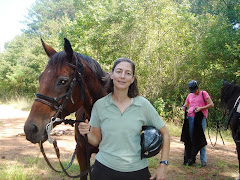
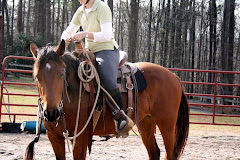
And the eyes of those two Indian ponies
Darken with kindness.
They have come gladly out of the willows
To welcome my friend and me.
We step over the barbed wire into the pasture
Where they have been grazing all day, alone.
They ripple tensely, they can hardly contain their happiness
That we have come.
They bow shyly as wet swans. They love each other.
There is no loneliness like theirs.
At home once more,
They begin munching the young tufts of spring in the darkness.
I would like to hold the slenderer one in my arms,
For she has walked over to me
And nuzzled my left hand.
She is black and white,
Her mane falls wild on her forehead,
And the light breeze moves me to caress her long ear
That is delicate as the skin over a girl's wrist.
Suddenly I realize
That if I stepped out of my body I would break
Into blossom.
And finally, Wild Geese by Mary Oliver, the first poem I ever read by her about five years ago and it prompted me to buy her books.
Wild Geese by Mary Oliver
You do not have to be good.
You do not have to walk on your knees
for a hundred miles through the desert repenting.
You only have to let the soft animal of your body
love what it loves.
Tell me about despair, yours, and I will tell you mine.
Meanwhile the world goes on.
Meanwhile the sun and the clear pebbles of the rain
are moving across the landscapes,
over the prairies and the deep trees,
the mountains and the rivers.
Meanwhile the wild geese, high in the clean blue air,
are heading home again.
Whoever you are, no matter how lonely,
the world offers itself to your imagination,
calls to you like the wild geese, harsh and exciting —
over and over announcing your place
in the family of things.
What is your favorite poem? Please share. kath.oneal@gmail.com


Subscribe to:
Post Comments (Atom)




No comments:
Post a Comment